
What I Heard about Disabilities in Harrison County
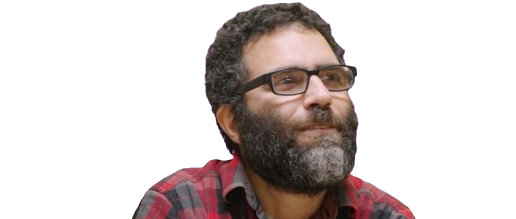

Recently, I had the chance to attend a picnic hosted by the Arc of Harrison County.
I spent the afternoon talking with individuals with disabilities and the people who care for them, and I asked a simple question: What would make your life better?
I spent part of my career working for a disability rights organization. Between 2016 and 2020, I was the Director of Innovation at the National Center for Learning Disabilities. So, I came to the picnic with some sense of what I'd hear. But I wanted to listen anyway, because the people closest to a problem are always the ones who understand it best. What I heard confirmed something I already believed: the things that make life better for people with disabilities make life better for all of us.
You can't work a job you can't get to
Over and over, people told me that transportation is the wall they run into first. It doesn't matter how good a job is if there's no way to physically get there. One advocate, Sarah, spoke to me about the real barriers she faces trying to get to work as a wheelchair user. Sarah is a person who wants to work. But she couldn’t find buses that accommodate her wheelchair, and the sidewalks in her community often aren’t accessible.
Politicians constantly tell people with disabilities that they should work and not just rely on benefits. But how? As a state and as a country, we haven’t devised a system that can deliver.
This isn't just anecdotal. In 2022, 18.6 million Americans age 5 and older — 6.1 percent of the population — self-reported a travel-limiting disability. Nationally, 14.4 percent of adults with disabilities report lacking reliable transportation for daily living, compared to 4.9 percent of adults without disabilities. Only about 60 percent of people with disabilities drive.
In rural West Virginia, where there's often no bus line and the nearest job might be twenty minutes away by car, that gap isn't an inconvenience. For Sarah and others I spoke to at the picnic, it's the difference between having a job and being unemployed.
If we're serious about growing jobs in this district, we have to be serious about getting people to those jobs. That means investing in accessible, reliable transportation as core economic infrastructure. Not an afterthought. Not a special program off to the side. But part of how we build a working economy.
Caretakers deserve better than what they're getting
The people who care for people with disabilities in Harrison County are doing some of the hardest, most essential work there is. And they are not paid like it.
I heard this from people directly: Caretakers could be doing something else with their time, something that pays more and asks less of them physically and emotionally. Many stay because they care. But that shouldn't be the only reason it's possible to do this work.
Recently, I’ve had to do more caretaking and interact with more professional caretakers because of my aging mother-in-law, who is no longer fully mobile. So, I know it’s a job that takes great skill and patience. This is not a job that just anybody can do. We need to pay caretakers with respect and livable wages.
This is exactly why my platform includes creating a Care Stimulus: a plan to make college free for people training to go into care professions: nursing, teaching, social work, and caretaking among them. We should be paying people who do this work more, not relying on their compassion to make up the difference. A community that wants to keep good caretakers has to be willing to invest in them.
Dignity for people with disabilities has to be the point
One person at the picnic put it simply: society made an effort, once, to make life more dignified for people with disabilities: Curb cuts. Wider doors. Elevators.
The ADA didn't happen by accident. It happened because people fought for it, and because, for a while, dignity was treated as something worth designing for.
That effort matters. And it doesn't stop mattering once the construction is done. A society that makes a real effort to treat all people with dignity ends up building better systems for everyone. Wider doorways help parents with strollers. Curb cuts help delivery workers. Clear signage helps people who are overwhelmed or in a hurry. Designing for dignity is not charity. It's an investment in our communities.
You can't be cared for if there's no hospital or health center
The last thing I heard, again and again, was fear about what will happen to healthcare in West Virginia after recent policy decisions. And that fear is well-founded.
Seven rural hospitals in West Virginia are at risk of closure because of Medicaid cuts in the federal reconciliation bill signed last year. Officials with the National Rural Health Association estimate the law will cut roughly $1 trillion from Medicaid nationally over the next decade.
More than a third of West Virginians are enrolled in Medicaid or CHIP — the seventh-highest rate in the country. The Commonwealth Fund estimates West Virginia could lose 5,800 jobs by 2026 as a result, with roughly 3,100 of those jobs in hospitals and community clinics themselves.
For people with disabilities and chronic conditions, a hospital closing isn't a budget line. It's the difference between getting care and not getting it, between staying in your community and having to leave it. We cannot talk seriously about strengthening this district's economy while the hospitals and health centers that anchor so many of our towns are on the chopping block.
What I'm taking from this
None of what I heard at this picnic was new to me, but it was a reminder of why I'm running. Job policy and disability policy are not two separate conversations. Accessible transportation is a jobs program. Paying caretakers fairly is a jobs program. Keeping rural hospitals open is a jobs program, because hospitals are some of the largest employers in our towns. And because none of us can work if we can't get the care we need.
The policies that make life better for people with disabilities and their caretakers make life better for everyone in West Virginia's Second District. Those policies are central to the kind of economy I'm running to build.


.jpg)